

آرٹیکل ری رائٹر — اپنی تحریر کو نئے الفاظ میں لکھنے کا آسان طریقہ اگر آپ بھی بلاگ لکھتے ہیں، ویب سائٹ چلاتے ہیں، یا کسی کا محتویٰ (کونٹینٹ) بار بار الگ الگ جگہوں پر استعمال کرنا پڑتا ہے، تو آپ کو یہ بات ضرور معلوم ہو گی کہ “ڈپلیکیٹ کونٹینٹ” کتنا بڑا مسئلہ بن سکتا ہے۔ گوگل ایک جیسی تحریر کو پسند نہیں کرتا، اور اگر آپ کا آرٹیکل کسی اور جگہ سے ملتا جلتا ہو، تو آپ کی ویب سائٹ کی ریٹنگ نیچے جا سکتی ہے۔ بس اسی مسئلے کو حل کرنے کے لیے ہم نے ایک چھوٹا سا مگر بہت کارآمد ٹول بنایا ہے — آرٹیکل ری رائٹر۔ یہ ٹول کرتا کیا ہے؟ بات بہت سیدھی ہے۔ آپ اپنا کوئی بھی آرٹیکل، پیراگراف، یا تحریر اس ٹول میں پیسٹ کریں، اور یہ اسے مکمل طور پر نئے الفاظ میں دوبارہ لکھ دیتا ہے۔ مطلب کا مفہوم، اہم نکات، اور اصل بات وہی رہتی ہے — لیکن جملوں کی ساخت، الفاظ کا انتخاب، اور لکھنے کا انداز بالکل بدل جاتا ہے۔ نتیجہ یہ نکلتا ہے کہ آپ کے پاس ایک ایسی تحریر آ جاتی ہے جو اصل تحریر سے مختلف ہے، پلیجرزم چیک میں بھی پاس ہو جاتی ہے، اور پڑھنے میں بھی رواں اور فطری لگتی ہے — کسی روبوٹ کی لکھی ہوئی نہیں لگتی۔ استعمال کیسے کریں؟ ٹول کا استعمال کرنا بہت آسان رکھا گیا ہے، تاکہ کوئی بھی بندہ بغیر کسی تکنیکی معلومات کے اسے چلا سکے۔ بس اتنا سا کام ہے۔ نہ کوئی سائن اپ، نہ کوئی پیچیدہ سیٹنگ۔ یہ کن لوگوں کے کام آ سکتا ہے؟ ایک اہم بات کا خیال رکھیں یہ ٹول بہت طاقتور ہے، لیکن ایک بات ہمیشہ ذہن میں رکھیں — بہترین نتیجہ اسی وقت ملتا ہے جب آپ مکمل پیراگراف یا آرٹیکل ایک ساتھ پیسٹ کریں، نہ کہ ٹوٹے پھوٹے جملے۔ جتنا واضح اور مکمل متن آپ دیں گے، اتنی ہی اچھی اور فطری تحریر آپ کو واپس ملے گی۔ نیز، جو مواد آپ دوبارہ لکھوا رہے ہیں، اس کے حقوق اور اخلاقی پہلو کا خیال رکھنا بھی آپ کی اپنی ذمہ داری ہے — یہ ٹول صرف الفاظ اور انداز بدلنے میں مدد دیتا ہے۔ آخری بات کونٹینٹ لکھنا وقت طلب کام ہے، اور بار بار ایک ہی بات کو نئے انداز میں بیان کرنا اور بھی مشکل۔ آرٹیکل ری رائٹر اسی محنت کو آسان بنانے کے لیے بنایا گیا ہے — تاکہ آپ اپنا وقت بچا سکیں اور اپنی توجہ اصل کام پر لگا سکیں۔ جا کر خود آزمائیں، اور دیکھیں کہ آپ کا کام کتنا آسان ہو جاتا ہے۔
Free Image Compressor
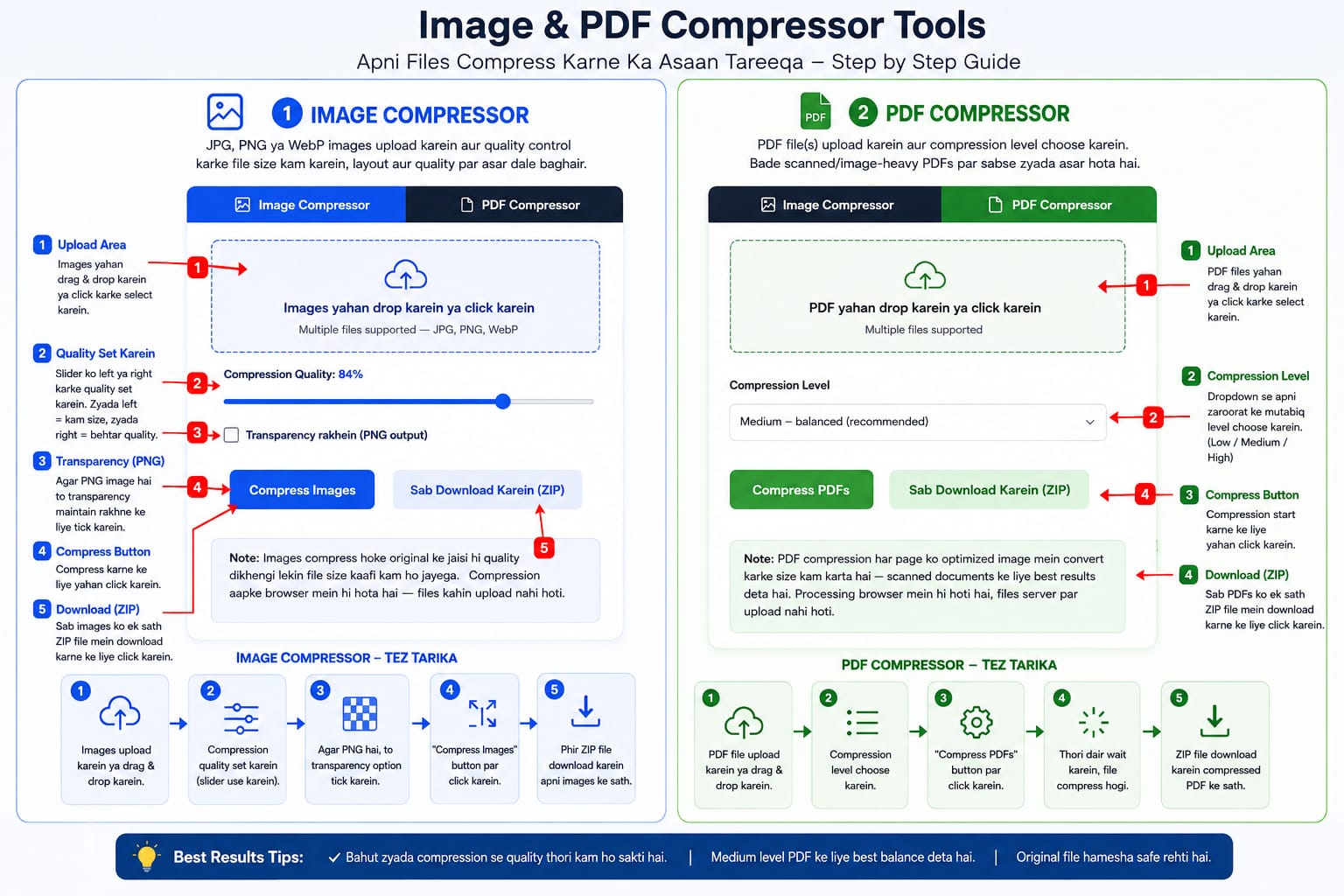
The Free Image Compressor on LigalDocs.com A Small Tool That Fixes a Big Everyday Headache There’s a specific kind of frustration that everyone who works with documents has felt at least once. You take a photo of something with your phone, or you scan a page on the office printer, and the file that comes out is enormous — five megabytes, eight megabytes, sometimes more, for what is essentially a single flat image. Then you try to attach it to an email, upload it to a form, or send it through a messaging app, and it either refuses to go through or takes forever crawling up a slow connection. Nothing about the image itself needed to be that heavy. It’s just how modern cameras and scanners work — they default to capturing far more data than most situations actually call for. The Free Image Compressor on LigalDocs.com exists to fix exactly that problem, and it does it in a way that doesn’t ask much of the person using it. No sign-up, no payment, no learning curve. You drop a picture in, adjust one simple setting if you want to, and get back a version of that same image that’s dramatically smaller without looking noticeably different to the eye. Why This Keeps Coming Up It’s worth pausing on why this problem is so common, because once you see the pattern, you notice it everywhere. Phone cameras today are built to capture as much detail as physically possible, because more megapixels sounds like a selling point on a spec sheet. Scanners in offices are usually left on their default settings, which almost always lean toward higher resolution than necessary, because nobody ever goes back and adjusts them. The result is that ordinary, everyday images — a photo of a signed page, a picture of an ID card, a screenshot of a receipt, a scanned certificate — end up carrying far more file size than the situation calls for. That excess weight doesn’t add any real value. A signature scanned at an enormous resolution doesn’t look any clearer to a human eye than one scanned at a fraction of that size — it just takes longer to upload, longer to email, and longer to open on the other end. The Free Image Compressor takes that unnecessary bulk out of the picture, literally, while leaving what actually matters — the clarity, the readability, the visual content — intact. What Actually Happens When You Use It The process is about as straightforward as it can be. You either drag an image onto the tool or click to select one from your device — JPG, PNG, and WebP are all supported, which covers pretty much anything you’d realistically be working with day to day. Once the image is loaded, there’s a single quality slider that controls how much compression gets applied. Slide it one way and you keep more of the original detail with a smaller reduction in size. Slide it the other way and you get a much smaller file, still perfectly usable for almost anything short of professional printing. What makes this genuinely practical rather than just a novelty is that you can see the result before you commit to anything. The tool shows you the original file size sitting right next to the new, compressed size, along with the percentage you’ve saved. There’s no guessing whether the compression did anything meaningful — the numbers are right there. If eighty percent quality still gives you a file size you’re happy with and the image still looks sharp, that’s your answer. If you want to push it further because you’re working with a strict upload limit, you can watch the number drop in real time as you adjust the slider. And because most people rarely need to compress just one image at a time, the tool supports batch uploads. Drop in ten, twenty, or more images at once, run them all through together, and instead of downloading each one individually, everything gets bundled into a single ZIP file that comes down in one click. Anyone who has ever had to compress a folder of scanned pages one at a time in some other tool will understand immediately why this matters — it turns a tedious, repetitive chore into something that takes a couple of minutes from start to finish. The Transparency Option Nobody Else Seems to Bother With Most free compression tools online take a shortcut: they convert everything to JPG and call it done. That works fine for photographs, but it breaks anything that relies on a transparent background — a scanned signature meant to sit cleanly on top of a document, a logo that needs to blend into whatever page it’s placed on, a graphic that isn’t supposed to have a visible box around it. The Free Image Compressor gives you the choice. There’s a simple toggle to keep the image as a PNG and preserve its transparency, rather than forcing everything through the same JPG conversion regardless of what the image actually needs. It’s a small detail, but it’s the kind of small detail that tells you the tool was actually built by paying attention to how these files get used in practice, rather than being a generic wrapper around the most basic compression method available. Nothing Leaves Your Device This is the part that matters most, and it’s worth being direct about it rather than burying it in fine print. The compression happens entirely inside your own browser. The image you select never gets uploaded to a server somewhere to be processed and sent back to you — it’s compressed locally, using your device’s own processing power, and the result is generated right there without the file ever leaving your machine. For anyone dealing with sensitive material — a scanned ID, a photo used as evidence, a signed personal document, anything you wouldn’t want sitting on a stranger’s server even briefly — this isn’t a minor technical detail. It’s the
DSCR Loan Calculator free
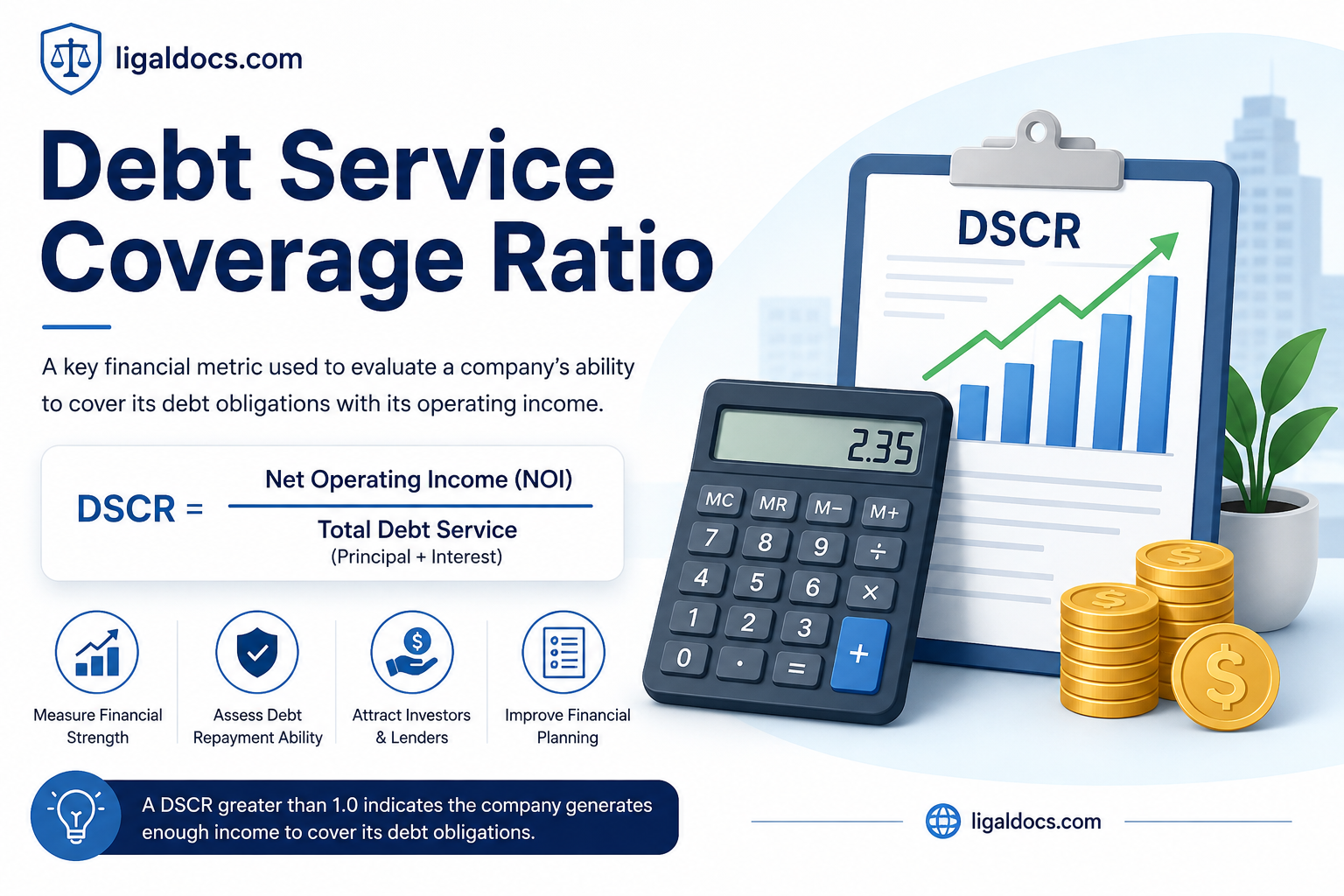
✎ میری نوٹ بک سے DSCR لون کیلکولیٹر — ایک آسان رہنما جب بھی کوئی سرمایہ کار کرایہ کی پراپرٹی کے لیے لون لینے کا سوچتا ہے، تو بینک یا لینڈر سب سے پہلے یہ دیکھتا ہے کہ پراپرٹی کی آمدنی اس کے قرض کی قسط چکانے کے لیے کافی ہے یا نہیں۔ اسی چیز کو ناپنے کا پیمانہ DSCR یعنی Debt Service Coverage Ratio کہلاتا ہے۔ DSCR کیا ہوتا ہے؟ سادہ لفظوں میں، DSCR یہ بتاتا ہے کہ پراپرٹی کی خالص آمدنی (Net Operating Income) قرض کی ماہانہ قسط کا کتنے گنا ہے۔ اگر یہ عدد ایک سے زیادہ ہو تو اس کا مطلب ہے کہ کرایہ کی آمدنی قسط پوری کرنے کے بعد بھی کچھ بچت چھوڑ رہی ہے۔ DSCR = خالص آمدنی (NOI) ÷ کل قرض کی قسط (Net Operating Income ÷ Total Debt Service) کیلکولیٹر کیوں ضروری ہے؟ ہاتھ سے یہ حساب لگانا مشکل اور غلطیوں سے بھرا ہو سکتا ہے، خاص طور پر جب سود کی شرح، قرض کی مدت اور اخراجات بھی شامل ہوں۔ ایک اچھا DSCR کیلکولیٹر چند سیکنڈوں میں درست نتیجہ دکھا دیتا ہے، جس سے سرمایہ کار فیصلہ جلدی اور اعتماد کے ساتھ کر سکتا ہے۔ اچھا DSCR کتنا ہونا چاہیے؟ 1.25 یا اس سے زیادہ — مضبوط، زیادہ تر لینڈرز کے لیے قابلِ قبول 1.00 – 1.24 — قابلِ برداشت، مگر رسک تھوڑا زیادہ 1.00 سے کم — آمدنی قسط پوری نہیں کر رہی، خطرناک صورتحال سرمایہ کاروں کے لیے فائدہ DSCR لون کی خاص بات یہ ہے کہ اس میں ذاتی آمدنی یا نوکری کی تنخواہ نہیں دیکھی جاتی — صرف پراپرٹی کی اپنی کمائی کو بنیاد بنایا جاتا ہے۔ اسی لیے یہ ریئل اسٹیٹ انویسٹرز، خاص طور پر خود روزگار افراد کے لیے، ایک نہایت آسان راستہ بن جاتا ہے۔ نیچے دیا گیا کیلکولیٹر استعمال کریں اور اپنی پراپرٹی کا DSCR فوراً معلوم کریں۔ ✔ — لکھا اور بنایا: پروفیسر شاہد علی میں نے پہلی بار DSCR کا نام تب سنا تھا جب ایک دوست نے کرایہ کی پراپرٹی کے لیے لون لینے کی کوشش کی، اور بینک نے اس کی تنخواہ کے کاغذات مانگنے کے بجائے صرف ایک سوال پوچھا: “پراپرٹی کا کرایہ آپ کی قسط کور کرتا ہے؟” وہ حیران رہ گیا کیونکہ اسے لگتا تھا کہ ہر لون میں سیلری سلپ اور ٹیکس ریٹرن دکھانا پڑتی ہے۔ لیکن DSCR لون کا پورا آئیڈیا ہی یہی ہے کہ پراپرٹی خود اپنی قسط چکائے، آپ کی جیب سے نہیں۔ DSCR کا مطلب کیا ہے DSCR یعنی Debt Service Coverage Ratio۔ اسے سمجھنا اتنا مشکل نہیں جتنا نام سے لگتا ہے۔ بس ایک سادہ سا موازنہ ہے: پراپرٹی جتنا کرایہ کما رہی ہے، اس میں سے اخراجات نکالنے کے بعد جو رقم بچتی ہے، وہ آپ کی ماہانہ قسط کا کتنا حصہ پوری کر رہی ہے۔ اگر یہ رقم قسط سے زیادہ ہے تو آپ محفوظ ہیں۔ اگر کم ہے تو مسئلہ ہے۔ فارمولا بھی سیدھا سا ہے: DSCR = خالص آمدنی ÷ ماہانہ قسط مثال کے طور پر اگر پراپرٹی سے 150,000 روپے کرایہ آتا ہے اور ٹیکس، انشورنس، مینٹیننس وغیرہ نکال کر 130,000 روپے بچتے ہیں، اور قسط 100,000 روپے ہے، تو DSCR بنے گا 1.3۔ مطلب پراپرٹی اپنی قسط سے 30 فیصد زیادہ کما رہی ہے۔ بینک اس نمبر کو اتنی اہمیت کیوں دیتے ہیں سیدھی سی بات ہے، لینڈر کو رسک کم کرنا ہوتا ہے۔ اگر آپ کی نوکری چلی جائے یا کاروبار میں نقصان ہو، مگر پراپرٹی خود اتنا کما رہی ہو کہ قسط پوری ہو جائے، تو بینک کا پیسہ محفوظ ہے۔ اسی لیے DSCR لون میں ذاتی تنخواہ، ملازمت کی تاریخ یا ٹیکس ریٹرن پر اتنا زور نہیں دیا جاتا جتنا عام مارگیج میں دیا جاتا ہے۔ یہی وجہ ہے کہ یہ لون سیلف ایمپلائیڈ لوگوں اور ریئل اسٹیٹ انویسٹرز میں اتنا مقبول ہو گیا ہے، خاص طور پر ان لوگوں میں جن کی آمدنی کا کوئی ایک مقررہ ذریعہ نہیں ہوتا۔ 1.0 سے کم DSCR کا مطلب اگر آپ کا DSCR ایک سے کم آ رہا ہے، تو اس کا سیدھا مطلب ہے کہ کرایہ کی آمدنی قسط پوری نہیں کر رہی — یعنی ہر مہینے آپ کو اپنی جیب سے کچھ رقم ملانی پڑے گی۔ ایسا ہونا کوئی قیامت نہیں، بہت سے انویسٹرز جان بوجھ کر ایسی پراپرٹیز لیتے ہیں کیونکہ لمبے عرصے میں قیمت بڑھنے کی امید ہوتی ہے۔ لیکن اگر آپ لون کے لیے اپلائی کر رہے ہیں تو زیادہ تر لینڈرز 1.0 سے کم DSCR پر یا تو منع کر دیتے ہیں یا شرح سود بڑھا دیتے ہیں۔ عملی طور پر DSCR بہتر کیسے بنایا جائے کچھ چیزیں جو واقعی کام کرتی ہیں: کرایہ کا ریٹ مارکیٹ کے مطابق چیک کریں — اکثر لوگ پرانے ریٹ پر کرایہ دیتے رہتے ہیں جبکہ آس پاس کی پراپرٹیز زیادہ کما رہی ہوتی ہیں۔ ڈاؤن پیمنٹ تھوڑی زیادہ دے دیں تاکہ قرض کی رقم اور اسی حساب سے قسط کم ہو جائے۔ لون کی مدت بڑھانے سے بھی ماہانہ قسط نیچے آ جاتی ہے، اگرچہ کل سود زیادہ لگتا ہے۔ اور کبھی کبھی صرف مختلف لینڈرز سے ریٹ کمپیئر کرنا ہی فرق ڈال دیتا ہے۔ آخری بات DSCR کوئی پیچیدہ چیز نہیں، بس ایک ایسا ٹیسٹ ہے جو یہ بتاتا ہے کہ آیا آپ کی پراپرٹی اپنے پاؤں پر کھڑی ہو سکتی ہے یا نہیں۔ اگر آپ ریئل اسٹیٹ میں سنجیدگی سے سرمایہ کاری کرنا چاہتے ہیں تو ہر ڈیل سے پہلے یہ نمبر ضرور نکالیں — یہ آپ کو ایسی پراپرٹی خریدنے سے بچائے گا جو ہر مہینے آپ کی جیب سے پیسے کھینچتی رہے۔ Real Estate Investment Tool DSCR لون کیلکولیٹر اپنی کرایہ کی پراپرٹی کے اعداد نیچے درج کریں اور فوری معلوم کریں کہ آپ کا Debt Service Coverage Ratio لینڈرز کے معیار پر پورا اترتا ہے یا نہیں۔ ماہانہ کرایہ کی آمدنی Rs ماہانہ اخراجات (ٹیکس، انشورنس، مینٹیننس) Rs قرض کی رقم (Loan Amount) Rs سالانہ شرح سود % قرض کی مدت سال DSCR شمار کریں — — خالص آمدنی / ماہ — قسط (P&I) / ماہ — ماہانہ فاضل رقم — رئیل اسٹیٹ انویسٹمنٹ — کرایہ کی آمدنی، اخراجات اور قرض کی قسط
how is mortgage-calculator
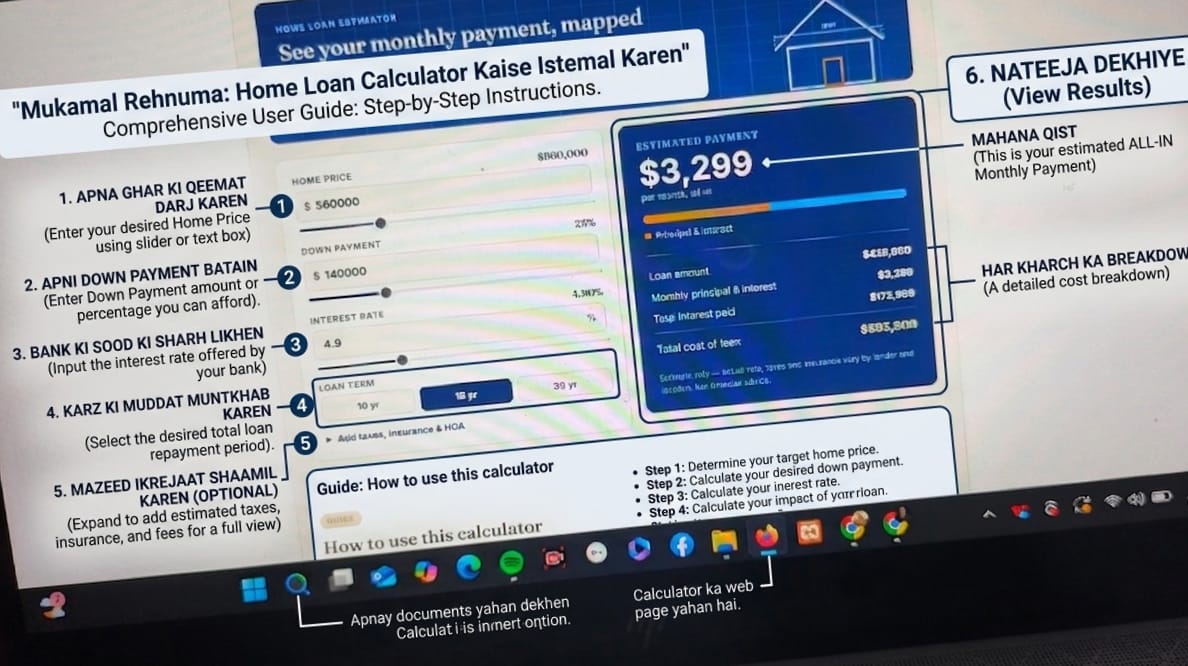
Mortgage Calculator کیا ہے؟ مکمل اردو گائیڈ (2026) تعارف اگر آپ اپنا گھر خریدنے کا ارادہ رکھتے ہیں یا مستقبل میں ہاؤسنگ لون لینے کے بارے میں سوچ رہے ہیں تو سب سے اہم سوال یہ ہوتا ہے کہ ہر ماہ کتنی قسط ادا کرنی ہوگی، مجموعی سود کتنا ہوگا اور قرض مکمل ہونے تک کل کتنی رقم واپس کرنی پڑے گی۔ ان تمام سوالات کا جواب حاصل کرنے کے لیے Mortgage Calculator ایک نہایت مفید آن لائن ٹول ہے۔ Mortgage Calculator ایک ایسا ڈیجیٹل کیلکولیٹر ہے جو چند بنیادی معلومات، جیسے قرض کی رقم (Loan Amount)، شرح سود (Interest Rate) اور قرض کی مدت (Loan Term)، کی بنیاد پر اندازہ لگاتا ہے کہ آپ کی ماہانہ قسط کتنی ہوگی، کل سود کتنا ادا کرنا پڑے گا اور قرض ختم ہونے تک مجموعی ادائیگی کتنی بنے گی۔ آج دنیا بھر میں لاکھوں لوگ گھر خریدنے سے پہلے Mortgage Calculator استعمال کرتے ہیں تاکہ وہ اپنے بجٹ کے مطابق بہتر فیصلہ کر سکیں۔ اگر آپ بغیر منصوبہ بندی کے ہاؤسنگ لون لیتے ہیں تو بعد میں مالی مشکلات کا سامنا کرنا پڑ سکتا ہے، جبکہ Mortgage Calculator پہلے ہی آپ کو ممکنہ اخراجات کی واضح تصویر دکھا دیتا ہے۔ Mortgage کیا ہوتا ہے؟ Mortgage ایک ایسا قرض ہے جو عموماً گھر، پلاٹ یا دیگر رہائشی جائیداد خریدنے کے لیے لیا جاتا ہے۔ اس قرض میں بینک یا مالیاتی ادارہ خریدار کو مطلوبہ رقم فراہم کرتا ہے، جبکہ خریدار اس رقم کو ایک مقررہ مدت میں سود سمیت ماہانہ اقساط کی صورت میں واپس کرتا ہے۔ جب تک قرض مکمل ادا نہیں ہو جاتا، خریدی گئی جائیداد اکثر بینک کے پاس بطور ضمانت (Security) رہتی ہے۔ اگر قرض کی اقساط مسلسل ادا نہ کی جائیں تو بعض صورتوں میں بینک قانونی کارروائی بھی کر سکتا ہے۔ اسی لیے قرض لینے سے پہلے مکمل منصوبہ بندی کرنا انتہائی ضروری ہے، اور یہی کام Mortgage Calculator آسان بنا دیتا ہے۔ Mortgage Calculator کیا کام کرتا ہے؟ Mortgage Calculator چند سیکنڈ میں درج ذیل معلومات کا تخمینہ فراہم کرتا ہے: یہ نتائج تخمینی ہوتے ہیں، لیکن بجٹ بنانے کے لیے انتہائی مفید ثابت ہوتے ہیں۔ Mortgage Calculator کیوں استعمال کرنا چاہیے؟ گھر خریدنا زندگی کے بڑے مالی فیصلوں میں سے ایک ہے۔ اگر آپ بغیر حساب کے قرض لے لیں تو بعد میں ماہانہ اقساط آپ کے بجٹ پر بوجھ بن سکتی ہیں۔ Mortgage Calculator استعمال کرنے کے چند اہم فوائد: Mortgage Calculator کیسے کام کرتا ہے؟ یہ ٹول عام طور پر درج ذیل معلومات لیتا ہے: 1. Loan Amount وہ رقم جو آپ بینک سے قرض لینا چاہتے ہیں۔ مثال: 2. Interest Rate بینک کی سالانہ شرح سود۔ مثال: شرح سود جتنی زیادہ ہوگی، کل سود بھی اتنا زیادہ ہوگا۔ 3. Loan Term قرض واپس کرنے کی مدت۔ مثال: زیادہ مدت رکھنے سے ماہانہ قسط کم ہو سکتی ہے، لیکن مجموعی سود بڑھ جاتا ہے۔ Mortgage Calculator کے اہم اجزاء ایک اچھا Mortgage Calculator عام طور پر درج ذیل نتائج دکھاتا ہے: یہ معلومات صارف کو قرض کی مکمل تصویر سمجھنے میں مدد دیتی ہیں۔ Mortgage Calculator کن لوگوں کے لیے مفید ہے؟ یہ ٹول صرف گھر خریدنے والوں کے لیے نہیں بلکہ بہت سے دوسرے افراد کے لیے بھی فائدہ مند ہے: Mortgage Calculator استعمال کرنے کے فوائد وقت کی بچت چند سیکنڈ میں مکمل حساب۔ بہتر مالی منصوبہ بندی ہر ماہ کتنی رقم درکار ہوگی، پہلے سے معلوم ہو جاتی ہے۔ مختلف آپشنز کا موازنہ آپ مختلف Loan Amount، Interest Rate اور Loan Term تبدیل کر کے نتائج دیکھ سکتے ہیں۔ اعتماد کے ساتھ فیصلہ گھر خریدنے سے پہلے مالی صورتِ حال واضح ہو جاتی ہے۔ مثال فرض کریں: Mortgage Calculator ان معلومات کی بنیاد پر آپ کو تخمینی ماہانہ قسط، کل سود اور مجموعی ادائیگی دکھا دے گا، جس سے آپ یہ فیصلہ کر سکتے ہیں کہ یہ قرض آپ کے بجٹ کے مطابق ہے یا نہیں۔ Mortgage Calculator استعمال کرتے وقت احتیاط نتیجہ Mortgage Calculator گھر خریدنے یا ہاؤسنگ لون لینے سے پہلے استعمال کیے جانے والے سب سے مفید آن لائن ٹولز میں سے ایک ہے۔ یہ آپ کو مالی ذمہ داریوں کا پہلے سے اندازہ دے کر بہتر فیصلہ کرنے میں مدد دیتا ہے۔ اگر آپ دانشمندانہ منصوبہ بندی کرنا چاہتے ہیں تو قرض لینے سے پہلے Mortgage Calculator ضرور استعمال کریں۔ اگلے حصے میں ہم Mortgage Formula، EMI Calculation، Down Payment، Fixed اور Variable Interest Rates، اور عملی مثالوں پر تفصیل سے بات کریں گے۔
what is VAT Calculator
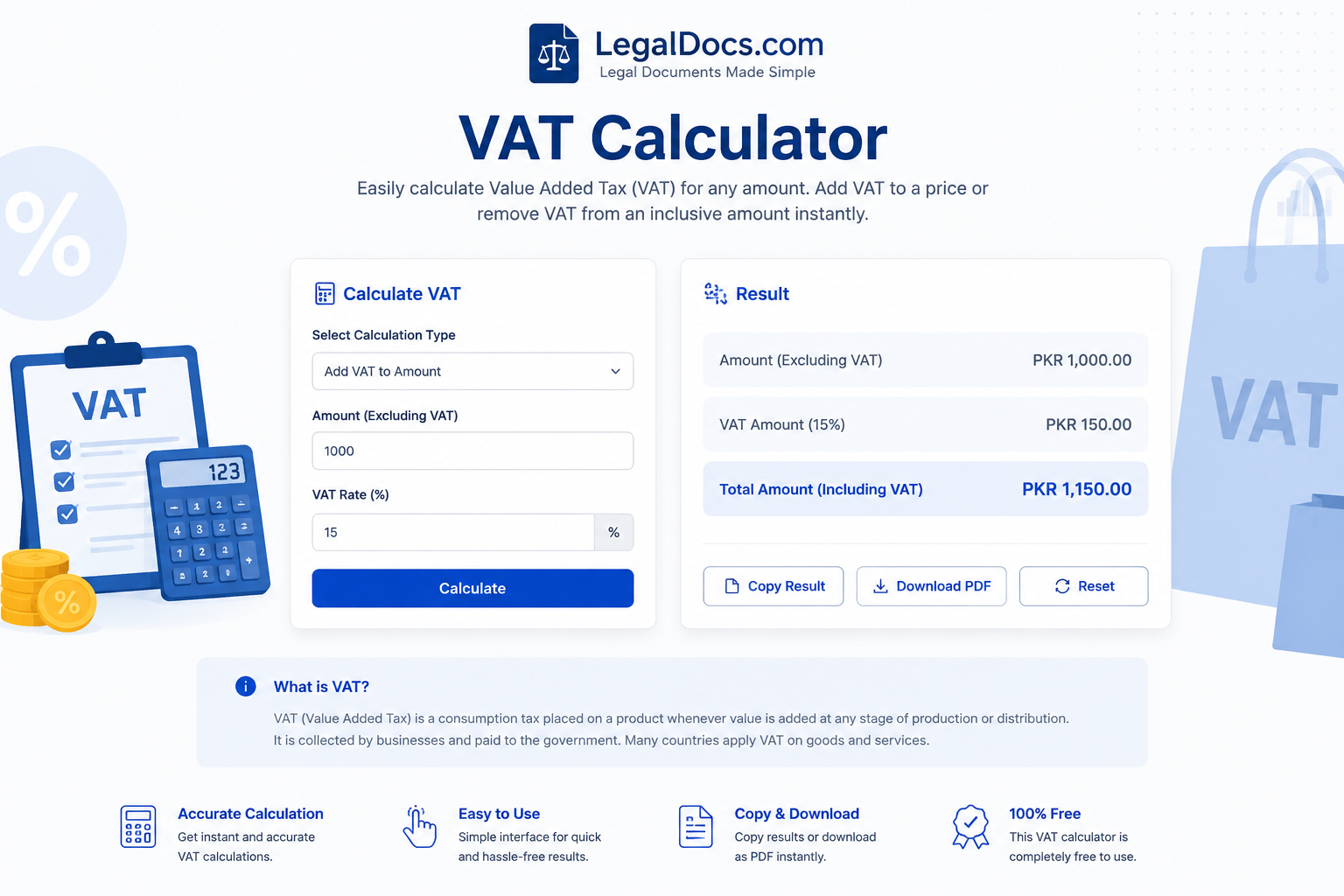
What Is a VAT Calculator? The Complete Guide to Understanding, Calculating, and Using VAT the Right Way Meta description: A plain-English guide to VAT calculators — what they are, how the math works, how to add or remove VAT in seconds, and how rates differ across the UK, EU, UAE, and Pakistan. If you’ve ever stared at a receipt, an invoice, or a supplier’s quote and thought, “wait, is that price before or after tax?” — you already understand why VAT calculators exist. VAT touches almost everything we buy and sell, yet most people only think about it when something doesn’t add up. Maybe you’re a freelancer trying to work out how much to invoice a UK client. Maybe you run a small shop and need to know your true profit margin after tax. Maybe you’re just trying to figure out why the price tag says one number and the receipt says another. Whatever brought you here, this guide is going to walk you through the whole picture. Not the dry, textbook version — the version that actually helps you get your numbers right the first time. We’ll cover what VAT is, what a VAT calculator actually does behind the scenes, how to do the math by hand (so you’re never dependent on a tool you don’t understand), how VAT rates differ from country to country, and the mistakes that trip up even experienced business owners. By the end, you won’t just know how to use a VAT calculator. You’ll know why it works, when to trust it, and when to double-check it yourself. Table of Contents 1. What Is VAT, Really? VAT stands for Value Added Tax. It’s a consumption tax, which is a fancy way of saying it’s a tax on spending rather than on income. Instead of the government taxing you once when you earn money, VAT taxes the value that gets added at every stage a product or service moves through — from raw material, to manufacturer, to wholesaler, to retailer, to you. Here’s the part that confuses most people at first: VAT isn’t charged once at the very end. It’s collected in layers, all along the supply chain. A farmer sells wheat to a mill and VAT gets added. The mill sells flour to a bakery and VAT gets added again — but only on the value the mill contributed, not on the whole price again. The bakery sells bread to a shop, and again, VAT applies to the value the bakery added. By the time the loaf reaches you at the till, VAT has technically been paid and reclaimed several times over by businesses along the way. You, the final customer, are the only one who can’t reclaim it. You just pay it. That’s really the whole trick of VAT: businesses pay it, but they can usually claim it back on their own purchases (this is called input tax), while charging it on their own sales (output tax). The difference between what they collect and what they paid gets sent to the tax authority. The person right at the end of the chain — the regular customer — carries the full cost with no way to get it back. VAT was first introduced in France in the 1950s and has since spread to more than 170 countries. The United States is one of the few major exceptions — it uses sales tax instead, which works differently (more on that later). If you’ve shopped in the UK, most of the EU, Pakistan (where it’s technically called sales tax but functions almost identically), the UAE, or dozens of other countries, you’ve paid VAT without necessarily calling it that. 2. What Is a VAT Calculator? Tax Tool VAT Calculator Add VAT Extract VAT Net Amount VAT Rate % Net Amount 0.00 VAT (15%) 0.00 Gross Total 0.00 A VAT calculator is a small tool — usually a website, app, or spreadsheet — that does the VAT math for you instantly. Instead of working through the percentages by hand, you type in a number, pick a rate, and the tool tells you the answer in the direction you need. Most VAT calculators handle two jobs: That second one trips people up constantly, because you can’t just subtract 20% from a VAT-inclusive price and expect the right answer. We’ll get into exactly why later in this guide, because understanding that one detail alone will save you from a mistake that a lot of business owners make without realizing it. A good VAT calculator also lets you pick from different rates (standard, reduced, zero-rated) and sometimes different countries, since VAT rates are anything but universal. Some tools are built for personal use — checking a receipt or working out a quick estimate — while others are built into accounting software and invoicing platforms, quietly calculating VAT on every line item of every invoice a business sends out. 3. The Two Directions of VAT Math: Adding vs. Removing Before we get to formulas, it helps to get very clear on the two directions VAT math can go, because this is where most confusion starts. Direction one: You have a price before tax (the net price), and you want to know the price after tax (the gross price). Example: A freelance web developer agrees a project fee of £1,000, plus VAT. The client needs to know the total they’ll actually pay. Direction two: You have a price that already includes tax (the gross price), and you want to know how much of that was tax, or what the price would have been without it. Example: You receive a supplier invoice for £1,200, and you know that figure includes VAT at 20%. You need to know exactly how much VAT you paid, so you can reclaim it correctly on your VAT return. These two situations use different math. Get them mixed up, and your numbers will be wrong — sometimes only slightly, but in accounting, “slightly wrong” still means wrong. A VAT
what is California lease agreement template
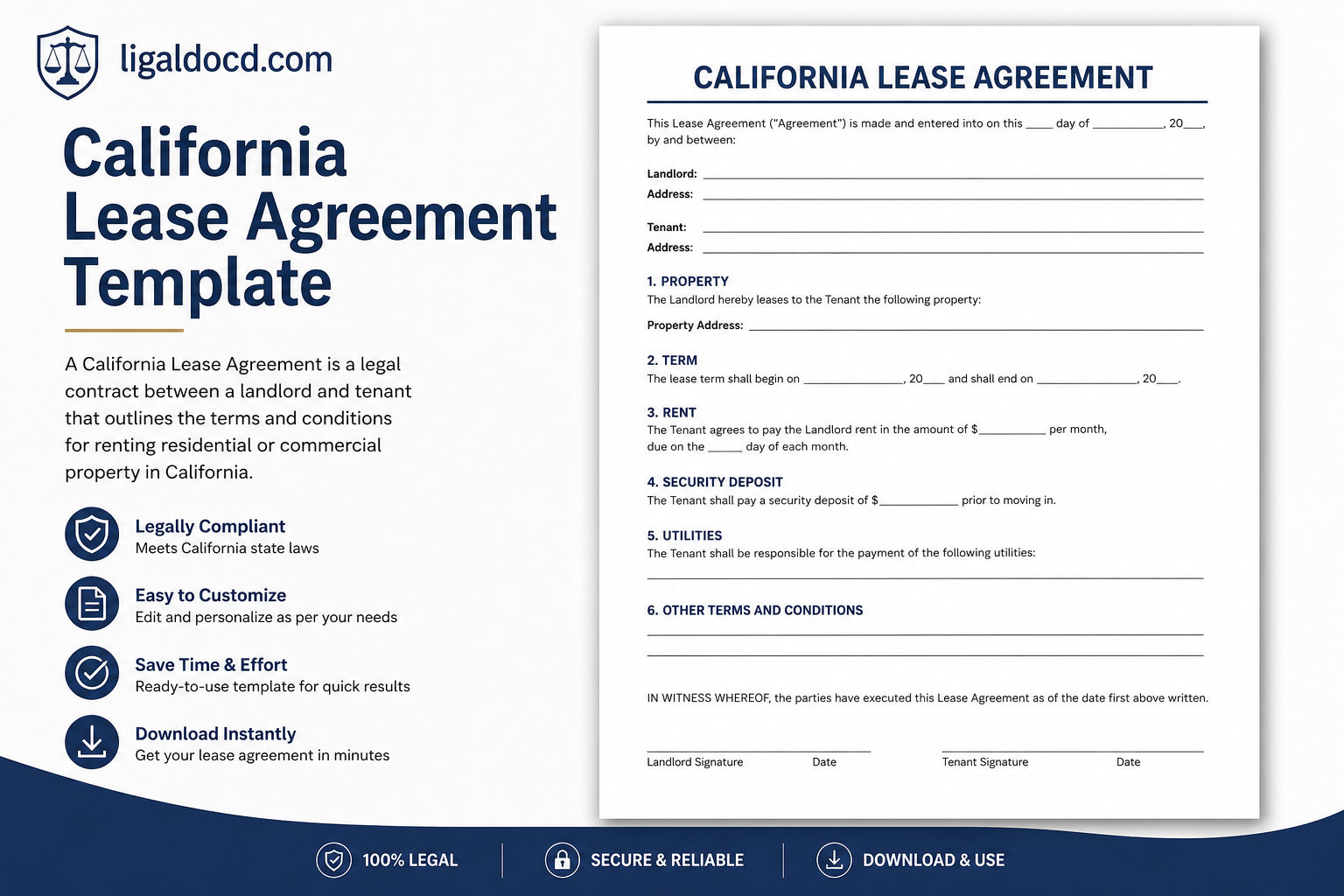
California Lease Agreement Template: Everything Landlords and Tenants Actually Need to Know in 2026 If you have ever tried to find a “California lease agreement template” online, you already know the problem. You get a hundred results that all look the same, half of them are outdated, and none of them tell you why a certain clause exists or what happens if you leave it out. That’s the gap this article is trying to close. Instead of just handing you a fill-in-the-blank form and calling it a day, I want to walk you through what actually goes into a legally sound California lease in 2026, why California treats leases so differently from most other states, and what mistakes tend to land landlords and tenants in small claims court. California is one of the most heavily regulated rental markets in the country. A lease that would be perfectly fine in Texas or Ohio can be missing three or four legally required pieces in California and nobody would notice until there’s a dispute. So this isn’t a generic “here’s a template” post. It’s meant to be the kind of resource you’d actually want to bookmark, whether you’re a landlord drafting your first lease, a property manager updating old paperwork, or a tenant trying to understand what you just signed. What a California Lease Agreement Actually Is At its core, a lease agreement is a contract. Two people (or a person and a company) agree that one side gets to live in a specific place for a specific period of time, and in exchange, the other side gets paid rent. That sounds simple, and legally, the basic idea is simple. What makes California leases complicated isn’t the concept — it’s the layers of state statutes, local ordinances, and disclosure requirements stacked on top of that basic agreement. In California, you’ll typically run into two main types of rental agreements: A fixed-term lease locks both parties into a set period, usually 12 months, though 6-month and month-to-month-converting-to-annual arrangements are common too. Neither side can just walk away early without consequences spelled out in the lease or under state law. A month-to-month rental agreement, on the other hand, renews automatically every 30 days until either party gives proper notice to end it. It’s more flexible, but it also means rent can change more often (with proper notice), and either side has an easier time ending the arrangement. Most of what follows applies to both, but I’ll flag places where the rules diverge. Why You Can’t Just Grab Any Generic Template Here’s something a lot of first-time landlords don’t realize: a lease template written for “the United States” in general, or one built for a different state and lightly edited, is almost never good enough for California. The reason is that California layers protections on top of the basic contract that most states simply don’t have. Some of the big ones: A one-month cap on most security deposits, thanks to Assembly Bill 12, which took effect July 1, 2024. Before that, landlords could ask for up to two months’ rent on an unfurnished unit and three months on a furnished one. Now, for the vast majority of landlords, one month’s rent is the ceiling — <cite index=”9-1″>and the law also blocks landlords from demanding last month’s rent upfront, pet deposits, or other advance payments as separate conditions of the lease, since all of those now count toward that same one-month limit</cite>. There’s a carve-out worth knowing about: <cite index=”4-1″>small landlords who own two or fewer rental properties totaling four or fewer units are exempt from AB 12 and can still collect up to two months’ rent</cite>. If you’re not sure which category you fall into, it’s worth double-checking before you write a deposit amount into a lease. Statewide rent control and just-cause eviction protections under the Tenant Protection Act (AB 1482), which caps how much rent can go up in a given year and, for tenancies that have lasted 12 months or more, generally requires landlords to have a legally recognized reason before ending a tenancy. A long list of mandatory disclosures that simply don’t exist in most other states — things like notices about registered sex offenders, bed bug history, mold, and even whether a death occurred on the property within the last three years. New rules that took effect January 1, 2026, including a requirement that rental units come with a working stove and refrigerator (AB 628) and a rule that landlords must disclose all mandatory fees upfront in advertising and in the lease itself, so tenants aren’t blindsided by “junk fees” after they’ve already committed. None of this is meant to scare you off from renting out property or signing a lease in California. It’s just meant to explain why “any old template” won’t cut it, and why the details below actually matter. The Core Pieces Every California Lease Should Include Let’s get into the actual bones of the document. A solid lease, whether you build it yourself or start from a template, generally needs the following sections. I’ll go through each one and explain not just what it is, but why it’s there. 1. Identification of the Parties and the Property This sounds obvious, but it trips people up more than you’d expect. You need the full legal names of every tenant who will be living there (not just “and family” or “et al.”), the landlord’s name or the property management company’s name, and a complete street address for the rental unit, including unit number if applicable. <cite index=”10-1″>California law also requires that the lease include the name, address, and phone number of whoever is responsible for managing the property, under Civil Code Section 1962</cite>. If you’re a landlord using a property manager, this needs to be spelled out, not left vague. 2. Lease Term State clearly whether this is a fixed-term lease or a month-to-month agreement, and if it’s fixed-term, list the start date and end date. If the lease

Indian Marriage A Complete Guide to Traditions
Indian Marriage A Complete Guide to Traditions, Rituals, Laws, and Modern Changes A deep, honest look at how India gets married — from the first “roka” to the final “vidaai,” and everything the modern couple actually needs to know. Introduction: Why Indian Weddings Are Not Just Weddings If you have ever attended an Indian wedding, you already know one thing — it is never just one event. It is a week, sometimes two weeks, of ceremonies, food, colours, music, tears, arguments over budgets, and finally, a bride and groom who look a little exhausted but very happy under all that gold jewellery. For people outside India, a wedding might mean one ceremony, one reception, and a honeymoon. In India, marriage is treated as one of the biggest events not just in a person’s life, but in the life of their entire extended family. It is not simply two people deciding to spend their lives together. It is two families, sometimes two communities, and occasionally two very different worlds, coming together under one roof. This guide is written for anyone who wants to actually understand Indian marriage — whether you are planning your own wedding, marrying into an Indian family, writing about Indian culture, or simply curious about why this whole thing takes so long and costs so much. We will walk through the history, the rituals across different religions and regions, the legal side that most people forget about until they need it, the dowry issue that nobody likes to talk about openly, and the way marriage in India is quietly but steadily changing. No fluff, no repeated filler. Just the real picture. A Quick Look at the History of Marriage in India Marriage in India is old. Not “a few centuries old” — we are talking about a tradition that stretches back over three thousand years, documented in texts like the Rig Veda, where marriage was already described as a sacred union, not a legal contract. In ancient India, marriage was seen as one of the sixteen samskaras — the life sacraments a person was expected to go through, alongside birth, education, and eventually death rites. It was considered a duty, a way to continue the family line, and a spiritual partnership rather than just a romantic one. The idea of “dharma,” or duty, was central. A husband and wife were expected to walk together through life fulfilling their responsibilities to family, community, and religion. Over the centuries, marriage practices in India were shaped by many forces — the caste system, regional kingdoms, the arrival of Islam and the growth of Muslim communities in India, colonial rule under the British, and later, the Indian Constitution after independence in 1947. Each of these left a mark on how Indians marry today. What is interesting is that despite all the modernisation, urbanisation, dating apps, and Western influence, the core idea that marriage is a family affair — not just an individual one — has survived. Even the most modern, English-speaking, corporate-job-holding Indian couple will usually still involve their parents in some way, even if it’s just informing them after the fact. Arranged Marriage vs Love Marriage: The Real Difference Ask anyone outside India about Indian marriage, and the first thing they usually bring up is “arranged marriage.” It is the most talked-about, most misunderstood part of Indian marital culture. What Arranged Marriage Actually Means An arranged marriage is not — and this needs to be said clearly — a marriage where two strangers are forced to marry without any say in the matter. That old stereotype does still exist in some very conservative or rural pockets, but it is not the norm anymore, especially in urban India. In most arranged marriages today, families or matchmakers introduce two people who they believe would be compatible, based on factors like caste, community, education, family background, financial status, and sometimes astrology. The two individuals then get to meet, talk, sometimes date for a few months, and ultimately decide for themselves whether they want to go ahead. Many modern arranged marriages look, in practice, very similar to a set-up date that eventually leads to marriage — except with much more family involvement from day one. What Love Marriage Means in India A love marriage is when two people meet on their own — through college, work, friends, or apps — fall in love, and then decide to marry, usually bringing their families in later to seek approval and plan the wedding. Love marriages are far more common now than they were even fifteen years ago, particularly in cities. But love marriages in India often still need family approval to actually happen smoothly, because the wedding itself is such a family-centred event. It is not unusual for a couple in love to spend months or even years convincing their parents before the wedding is finally allowed to happen, especially if the match crosses caste, religion, or economic class lines. The Middle Ground: “Arranged Love Marriage” There is now a very common third category that younger Indians jokingly call an “arranged love marriage” — where families arrange the introduction, but then step back and let the couple date, get to know each other, and fall in love before formally agreeing to marry. This hybrid model has become extremely popular because it satisfies both sides: parents feel involved and reassured about background checks, while the couple gets the emotional connection of choosing each other. The Role of Family, Astrology, and Kundli Matching One thing that surprises a lot of people is how seriously many Indian families take astrology when deciding on a match, particularly in Hindu families. Before a wedding is finalised, families often exchange the birth charts, known as “kundlis,” of the bride and groom. A priest or astrologer studies the alignment of planets at the time of each person’s birth and checks for compatibility across several categories — commonly referred to as “gun milan,” where points are given out of a total of 36. A
how is usa low definition
Understanding US Law What It Really Means and Why It Matters to You If you have ever sat through a news report about a court case and felt completely lost the moment the anchor said words like “statute,” “tort,” or “jurisdiction,” you are not alone. Most people go through their entire lives interacting with the legal system without ever really understanding how it works. They pay taxes, sign leases, get traffic tickets, and maybe even serve on a jury, yet the actual structure of American law remains a mystery to them. This article is written for exactly that person. Not a law student. Not a lawyer. Just someone who wants to understand, in plain and honest English, how law in the United States is defined, where it comes from, how it is organized, and what all those confusing terms actually mean in everyday life. By the time you finish reading, you should be able to follow a legal news story, read a contract without panicking, and hold your own in a conversation about how the American legal system actually functions. Let’s start from the very beginning. What Is Law, Really? Before we can talk about American law specifically, we need to agree on what “law” even means. At its core, a law is a rule that a government creates and enforces to control behavior within a society. It is not just a suggestion or a moral guideline. A law comes with consequences. If you break it, something happens to you — a fine, a warning, jail time, or some other penalty, depending on how serious the violation is. Laws exist for a simple reason: without them, society would fall into chaos. Imagine a world where there was no rule against theft, no requirement to pay for goods and services, no consequence for breaking a promise in a contract. Trust would collapse almost instantly. Law is the invisible framework that lets millions of strangers live, work, and do business together without descending into constant conflict. In the United States, law is not just one thing. It is a layered system with multiple sources, multiple levels of government, and multiple types of rules working together — sometimes smoothly, and sometimes in tension with each other. That complexity is exactly why so many people find it confusing. So let’s break it apart, piece by piece. The Foundation: The US Constitution Every legal system needs a starting point, a foundational document that everything else is built on top of. In the United States, that document is the Constitution, written in 1787 and put into effect in 1789. It is the oldest written national constitution still in active use anywhere in the world, and it remains the highest legal authority in the country. The Constitution does three main things. First, it creates the structure of the federal government, splitting power between three branches: the legislative branch (Congress, which makes laws), the executive branch (the President and federal agencies, which enforce laws), and the judicial branch (the courts, which interpret laws). This separation of powers was intentional. The people who wrote the Constitution had just fought a war against a king who held unchecked power, and they were determined not to recreate that situation. Second, the Constitution defines the relationship between the federal government and the individual states. The United States is not one single unified legal system; it is fifty separate state legal systems layered underneath one federal system. This is called federalism, and it is one of the most important — and most confusing — features of American law. Third, the Constitution, especially through its first ten amendments known as the Bill of Rights, protects individual freedoms from government interference. Freedom of speech, freedom of religion, the right to a fair trial, protection against unreasonable searches — these are not laws in the ordinary sense. They are limits placed on what the government itself is allowed to do. Any law passed anywhere in the United States, whether by Congress, a state legislature, or a city council, must comply with the Constitution. If a law violates constitutional protections, courts have the power to strike it down. This power, known as judicial review, was not explicitly written into the Constitution but was established by the Supreme Court in the famous 1803 case Marbury v. Madison. Since then, it has become one of the most powerful tools in the American legal system. Where American Laws Actually Come From People often assume that “the law” is a single, unified thing sitting in one big book somewhere. In reality, American law comes from several different sources, and understanding these sources is the key to understanding how the whole system fits together. Constitutional Law As explained above, this is the highest source of law. Both the federal government and each individual state has its own constitution. State constitutions cannot contradict the federal Constitution, but they can grant additional rights beyond what the federal Constitution guarantees. Statutory Law These are the laws written and passed by a legislative body. At the federal level, that means laws passed by Congress and signed by the President (or passed over a presidential veto). At the state level, it means laws passed by state legislatures. At the local level, city councils and county boards pass what are usually called ordinances, which function the same way but apply only within a specific city or county. Statutory law covers an enormous range of everyday life: traffic rules, tax requirements, criminal offenses, business regulations, and much more. When people say “there’s a law against that,” they are almost always referring to a statute. Common Law This is where things get interesting, and where a lot of confusion starts. The United States inherited its legal tradition largely from England, and one major part of that inheritance is the concept of common law. Common law is law that develops over time through court decisions rather than through a legislature writing it down in advance. Here is how it works
lease agreement template free
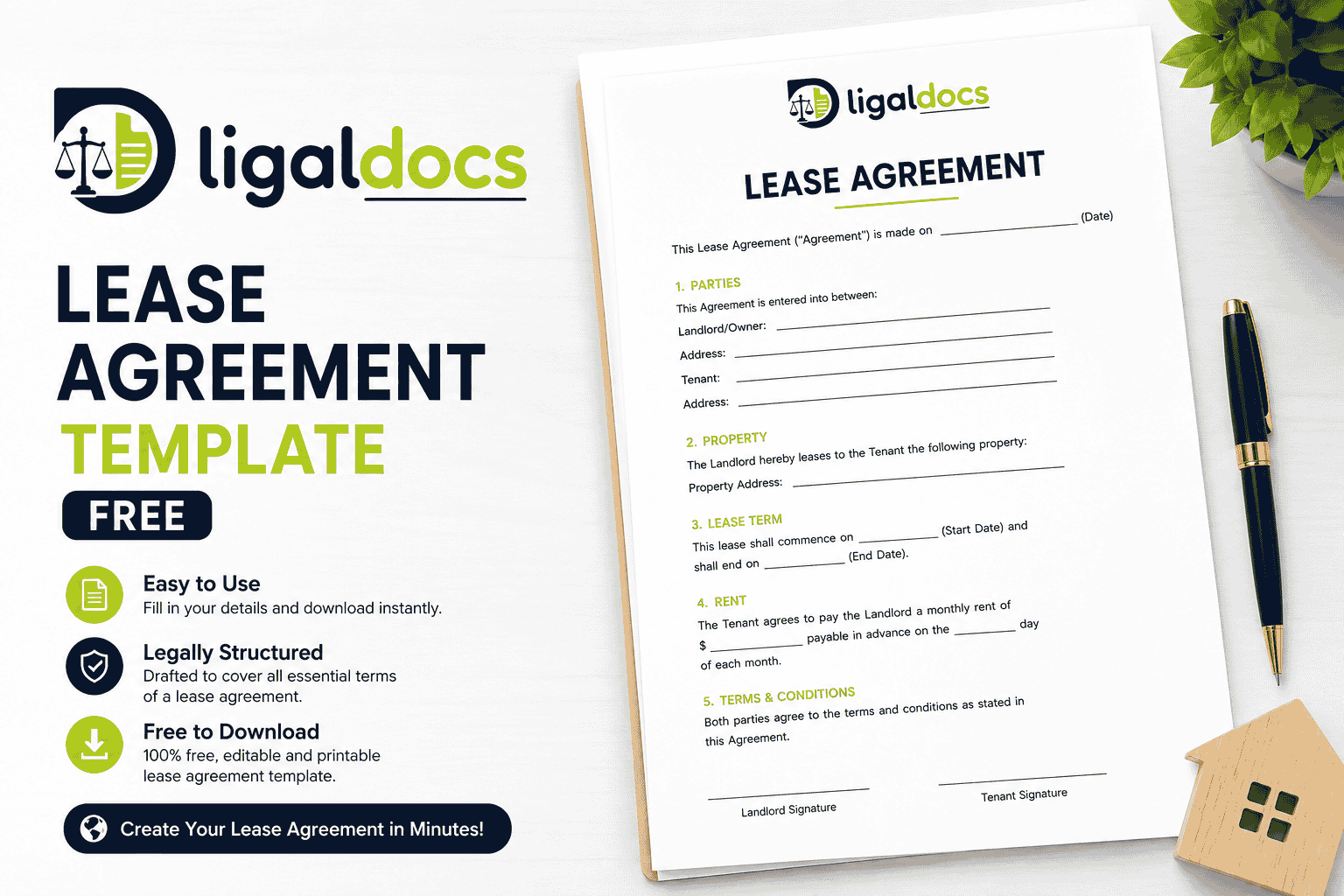
Lease Agreement Template Free The Complete Guide to Finding, Filling, and Using One the Right Way If you’ve typed “lease agreement template free” into a search bar, you’re probably standing at one of two moments. Either you’re a landlord about to rent out a property for the first time (or the tenth time, but you still hate paperwork), or you’re a tenant who just got told “sure, send over a lease and we’ll sign it” — and now you’re realizing nobody actually handed you one. Either way, you’re in the right place. This guide walks through everything you need to know about lease agreement templates: what they actually are, why a free one might be all you need, where the good ones hide online, what clauses matter most, the mistakes that get people into trouble, and how to turn a generic template into a document that actually protects you. No legal jargon for the sake of sounding smart. No filler. Just the stuff that matters when real money and a real property are on the line. Let’s get into it. What Exactly Is a Lease Agreement Template? A lease agreement template is a pre-written, fill-in-the-blank version of a rental contract. Instead of starting from a blank page — which, let’s be honest, almost nobody does anymore — you take a document that already has the standard structure and legal language built in, and you customize it with your specific details: names, address, rent amount, dates, and any special terms you and the other party agree on. Think of it the same way you’d think of a resume template. The format, the sections, and the general flow are already figured out by someone who’s done this a hundred times before. You’re just plugging in your information and adjusting a few things to fit your situation. A good template typically covers: The “free” part just means you’re not paying a lawyer $300–$800 to draft one from scratch, or paying a subscription fee to a document service. For a lot of straightforward rental situations — a single-family home, an apartment, a room in a shared house — a well-chosen free template genuinely gets the job done. Why People Search for “Free” Specifically There’s no shame in wanting something free. Renting out a property or renting a place to live already comes with enough expenses — deposits, moving costs, maybe a background check fee, sometimes broker fees depending on where you are. Adding a legal drafting bill on top of that feels unnecessary when the core structure of a lease is, honestly, pretty standard across most situations. Here’s the thing worth understanding, though: free doesn’t have to mean low-quality. Some of the most solid, legally sound lease templates out there are free precisely because they’re published by organizations that want to make rental relationships fairer and less confusing — state housing authorities, tenant rights organizations, and even some real estate associations that publish templates as a public service or as a way to build trust with future clients. The templates you want to be cautious about are the ones from random, unbranded websites with no indication of who wrote them or when they were last updated. Landlord-tenant law changes. A template written in 2015 might be missing a clause that’s now legally required in your area, or might include language that’s since become unenforceable. Fixed-Term vs. Month-to-Month: Picking the Right Type Before You Even Open a Template Before you download anything, it helps to know which kind of lease you actually need, because templates are built differently depending on the arrangement. Fixed-term lease. This is the classic one-year (or six-month, or two-year) agreement. Both parties commit to the full term. The tenant can’t just leave early without consequences, and the landlord generally can’t raise the rent or ask the tenant to leave before the term ends, barring a serious violation of the agreement. This type suits landlords who want predictable, stable income and tenants who want price certainty and don’t plan on moving soon. Month-to-month lease. This renews automatically every month until either party gives proper notice to end it — usually 30 days, though this varies. It’s more flexible for both sides but also less stable. Rent can typically be increased with proper notice, and either party can walk away with less commitment. This suits short-term renters, people testing out a new city, or landlords who want flexibility to sell or renovate a property without being locked into a year-long commitment. There’s also sublease agreements (when an existing tenant rents out their space to someone else, with the original landlord’s knowledge), room rental agreements (for shared housing situations), and commercial lease agreements (for business spaces, which come with a whole different set of considerations around zoning, build-outs, and liability). Trying to force a commercial lease template onto a residential apartment rental, or vice versa, is one of the more common early mistakes people make. The clauses just don’t map onto each other well. Where to Actually Find Reliable Free Templates This is usually the part people care about most, so let’s not bury it. Government and housing authority websites Many state and local housing departments publish free, legally reviewed lease templates specifically written to comply with that jurisdiction’s laws. These are often the gold standard because they’re written with actual local tenant-landlord law in mind, not a generic one-size-fits-all document. If your area has a housing authority or a department of consumer affairs, it’s worth checking their site before anywhere else. Tenant rights organizations and legal aid groups Nonprofit legal aid organizations frequently publish plain-language lease templates alongside guides explaining tenant rights. These tend to be written with fairness in mind for both sides, and they’re usually updated when laws change, since keeping people informed is the whole point of the organization existing. Real estate associations National and regional real estate or property management associations sometimes offer free basic templates, especially ones aimed at first-time landlords, as part of their educational resources.

how is Arizona Quit Claim Deed Form
Arizona Quit Claim Deed Form A Practical, Plain-English Guide If you typed “Arizona quit claim deed form” into a search bar, chances are you’re not browsing out of curiosity. You’re probably about to add a spouse to a title after a wedding, take an ex-spouse’s name off a house after a divorce, move a property into a living trust, or clean up a small ownership mess that’s been sitting on the back burner for years. Whatever brought you here, the good news is that a quitclaim deed in Arizona is one of the simpler real estate documents you’ll ever deal with — but “simple” doesn’t mean “forgiving.” Arizona has its own formatting rules, its own statutory language, and its own recording quirks, and getting even one small detail wrong can mean a rejected filing or, worse, a defective transfer that causes headaches years down the road. This guide walks through everything a person actually needs to know before filling out and recording a quitclaim deed in Arizona: what the document legally does, what has to be written on it, how the Affidavit of Property Value fits into the picture, what it costs, and where people commonly trip up. It’s written for regular property owners, not attorneys, though anyone in the legal or title world should find the statutory references useful too. One note before we get into it: this article explains how Arizona quitclaim deeds generally work. It isn’t legal advice, and it can’t account for the specific facts of your situation things like liens, existing mortgages, community property questions, or a messy title history can change what you should actually do. If your transfer is anything other than straightforward, a real estate attorney or a title company in your county is worth the phone call. What a Quitclaim Deed Actually Does A quitclaim deed transfers whatever ownership interest the person signing it the grantor happens to hold in a piece of real property, and nothing more. It doesn’t promise the title is clean. It doesn’t promise the grantor even owns the property free and clear. It simply says, in effect, “whatever claim I have to this land, I’m handing it to you.” That might sound like a weak document, and in a sense it is but that’s exactly why it’s useful. A quitclaim deed skips the title warranties and covenants that come with other deed types, which makes it fast to prepare and low-risk for the person giving up the interest. Nobody signing a quitclaim deed is putting themselves on the hook if it turns out there’s a lien on the property or a boundary dispute nobody knew about. That’s the tradeoff: speed and simplicity in exchange for zero guarantees. Compare that to a warranty deed, which is the document typically used in an arm’s-length home sale between strangers. A warranty deed comes with promises that the seller actually owns the property, that there are no hidden liens, and that the seller will defend the buyer’s title if a problem surfaces later. A quitclaim deed makes none of those promises, which is exactly why it isn’t the right tool for buying a house from someone you’ve never met. It’s built for transfers where the parties already trust each other or where the goal isn’t really a “sale” in the traditional sense at all. Where Quitclaim Deeds Actually Get Used in Arizona In practice, most Arizona quitclaim deeds fall into a handful of recurring categories: Divorce settlements. When a divorce decree awards a house to one spouse, a quitclaim deed is usually the tool used to formally remove the other spouse’s name from title. The court order handles the legal division of property; the quitclaim deed is the paperwork that makes the county recorder’s records match that reality. Adding a new spouse to title. After a marriage, it’s common for one partner to add the other to the deed. A quitclaim deed handles this cleanly, and in Arizona it can even be drafted to create a specific form of ownership — like community property with right of survivorship — depending on what the couple wants. Gifting property to family. Parents transferring a home to an adult child, or grandparents setting up an early inheritance, often use quitclaim deeds because no money is changing hands and the parties trust each other completely. Moving property into a trust. Estate planning attorneys use quitclaim deeds constantly to shift a person’s home into a revocable living trust, which helps the property avoid probate later. Removing a name from title. Maybe a co-owner passed away, moved on from a joint investment, or was added to a title years ago for a reason that no longer applies. A quitclaim deed is the standard way to formally drop that person’s interest. Clearing up “clouds” on title. Sometimes an old deed has a typo, a missing signature, or an ambiguous legal description, and a quitclaim deed is recorded specifically to correct the record and confirm who currently holds the interest. Notice what all of these have in common: the parties know each other, and the transfer usually isn’t a traditional sale for market value. That’s the pattern that quitclaim deeds are built for. The Legal Foundation: What Arizona Statutes Actually Say Arizona’s quitclaim deed rules aren’t buried in some obscure regulation they’re spelled out fairly plainly across a handful of sections in Title 33 and Title 11 of the Arizona Revised Statutes (A.R.S.). Knowing the statutes doesn’t just satisfy curiosity; it explains why the form has to look and read the way it does. A.R.S. § 33-402 is the heart of it. This section actually provides the statutory short-form language for a quitclaim deed. Arizona doesn’t leave grantors guessing at how to phrase the conveyance the law gives you the words: “for the consideration stated, I hereby quit claim to the grantee all my interest in the described property.” As long as a deed uses language substantially similar to that, along with the required signature and acknowledgment,